

Face Value – Inside the world of Deepfake-driven social media promotions

Fake Faces, Real Consequences
Recent reports indicate that cybercriminals are exploiting Facebook ads by using sophisticated AI and deepfake technologies for testimonials and promotions to make scams appear legitimate. These deepfakes can feature fabricated celebrity endorsements to enhance credibility.1 This is the second installment in our deepfake series, following our earlier report on romance scams.
The financial sector is increasingly being targeted by cybercriminals using deepfake-powered advertising campaigns.


TRUST ISSUES: DEEPFAKES AND THE NEW CONSUMER THREAT
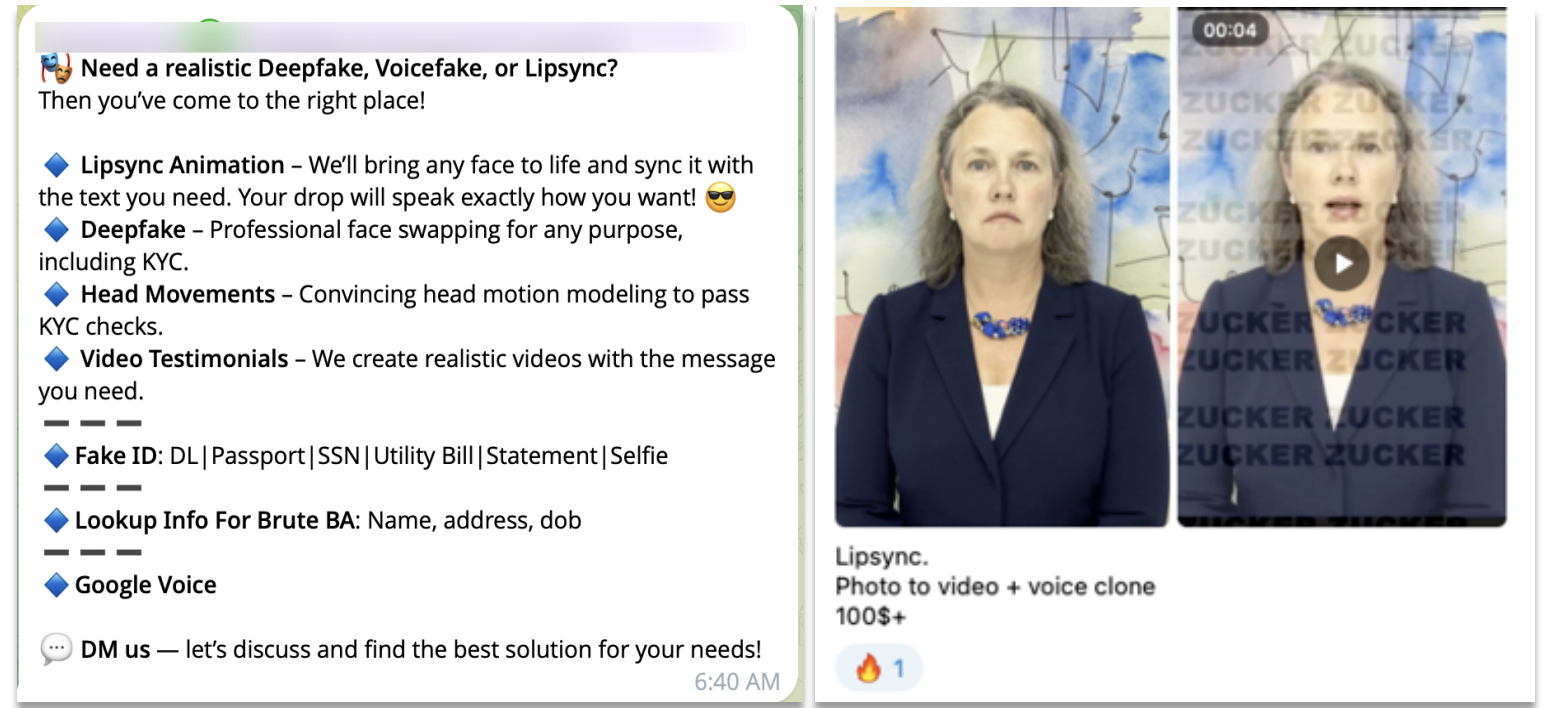
As deepfake technology continues to evolve and proliferate across illicit markets, threat actors are exploring increasingly diverse use cases. In general, the same underground Deepfake-as-a-Service business models or generative tools are often at the core of deepfake threats. The customizability allows for a wide spectrum of applications, ranging from KYC fraud to even romance scams. One emerging area of interest involves the use of deepfakes for brand promotion. As part of the discussion, some cybercriminals offer solutions bypassing Facebook ads moderation measures for detecting and flagging AI generated content.



CONSIDERATIONS
- According to a recent survey conducted by on-chain analytics firm CryptoQuant, more than 60% of cryptocurrency investors fall within the 25 to 44 age range.6 This may mean that the context, coupled with the deceptive nature of these scams, may make them particularly effective at capturing the attention of a younger audience.
- If an ad appears to be celebrity endorsed- double check their verified page to confirm.
- Never give out payment or personal information if directed off platform (Whatsapp, etc) under the auspices of free or easy money.
2Ibid
3https://www.ccn.com/news/crypto/crypto-scams-ai-deepfakes-cost-victims-4b-2024/
4https://www.bitget.com/blog/articles/bitget-2025-crypto-scam-report
5https://www.ccn.com/news/crypto/crypto-scams-ai-deepfakes-cost-victims-4b-2024/
6https://cointelegraph.com/news/60-of-crypto-investors-are-young-educated-and-invest-under-10k-survey