

Loving the Liw:How AI Powers Modern Romance Scams

NOT YOUR SOULMATE—JUST SOME SOFTWARE
As online dating and the use of dating apps have grown in popularity over the years, so too has the prevalence of scams targeting users on these platforms. According to Barclays, romance scams rose by 20% in the first quarter of 2025 compared to the same period in 20241.
This growth stems in part from cybercriminals capitalizing on the latest technological advancements. Threat actors are increasingly leveraging artificial intelligence through deepfake technology to orchestrate romance scams. Such technological advancements make it easier for cybercriminals to impersonate anyone—from regular people to celebrities—in order to exploit victims.
By replacing the fraudster’s face with a user-created or celebrity image during live video calls and recordings, threat actors can better convince their victims they are in fact the individual they are purporting to be. In doing so, their impersonations may rely on pre-written scripts and situational narratives which are designed to replicate genuine romantic relationships. This report details how cybercriminals manage to trick victims into falling prey to romance scams while highlighting a few prominent tools ranging from manipulating audio to creating live deepfake interactions.

COPY, PASTE, MANIPULATE: THE ROMANCE SCAM
Romance scams often feature unoriginal and recycled scripted dialogue that threat actors use to mimic that of genuine romantic connections. Such scripts are often exchanged amongst cybercriminals in underground communities, including even tailored scripts, such as those created specifically for celebrity impersonations. Below are excerpts from romance scam scripts designed by cybercriminals for celebrity impersonations.
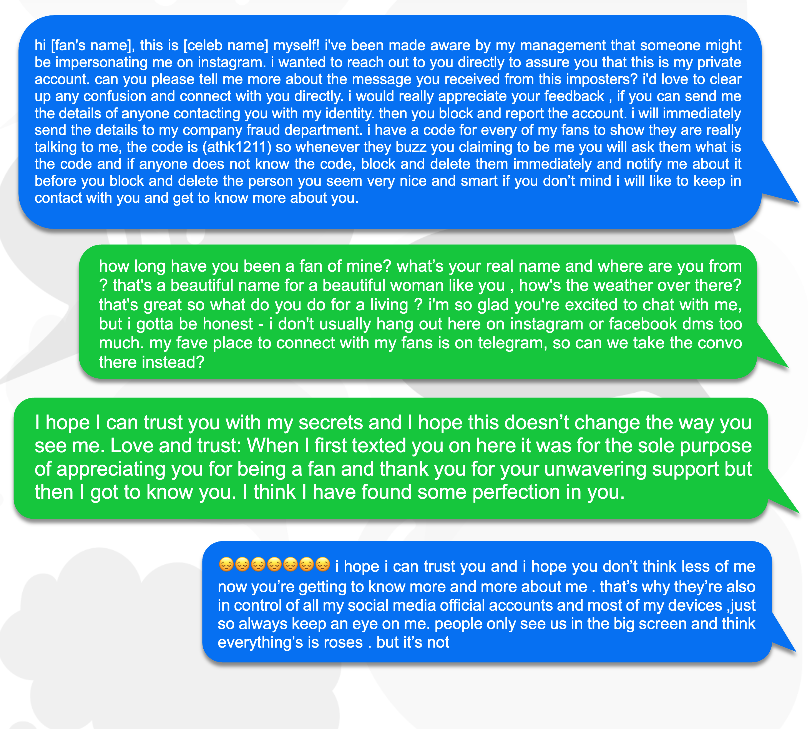
Some romance scams not only share similar scripting, but unoriginal storylines. For example, the plot may involve an upcoming divorce, which is then used as a tactic to persuade the victim to send money.

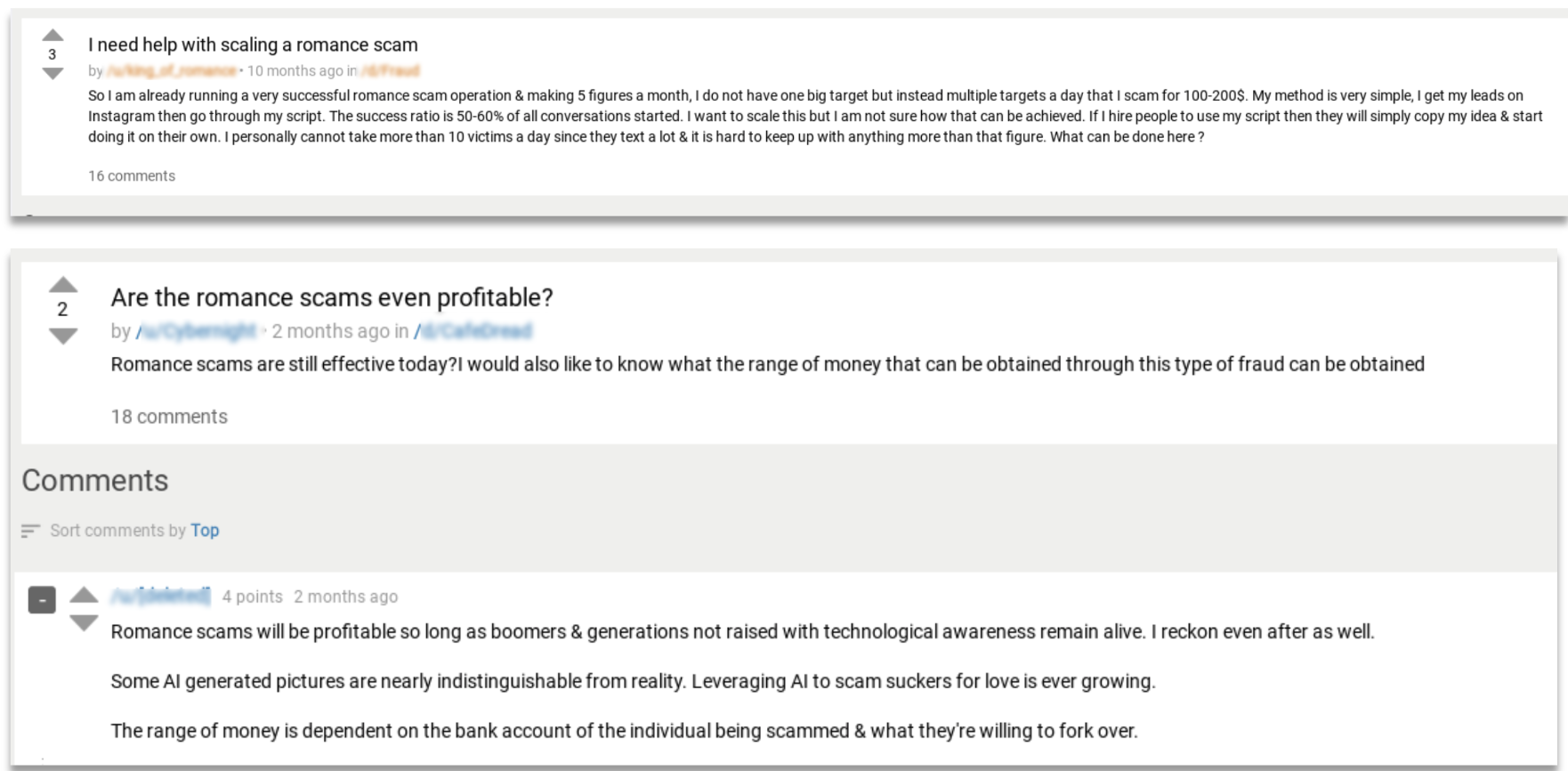
Under the guise of an authentic committed relationship, the threat actor’s ultimate goal is to manipulate their victims into sending money to their “romantic partner”. Cybercriminals comment that this has the potential to be a particularly lucrative scheme.
ARTIFICIAL ATTRACTION: AI’S ROLE IN ROMANCE
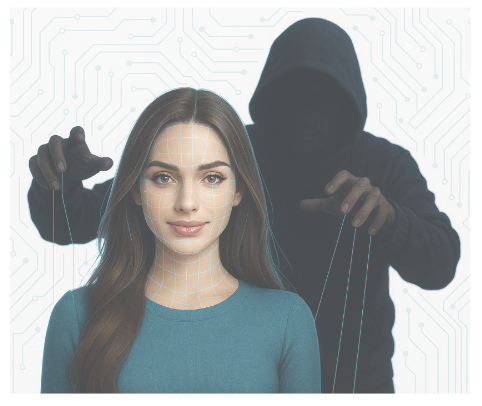
In addition to scripted dialogues, cybercriminals are taking advantage of new technologies to impersonate individuals and celebrities. Threat actors explore a variety of audio and visual manipulation tools and software, ranging from publicly-available applications and websites to proprietary tools created by fraudsters and sold across underground communities.
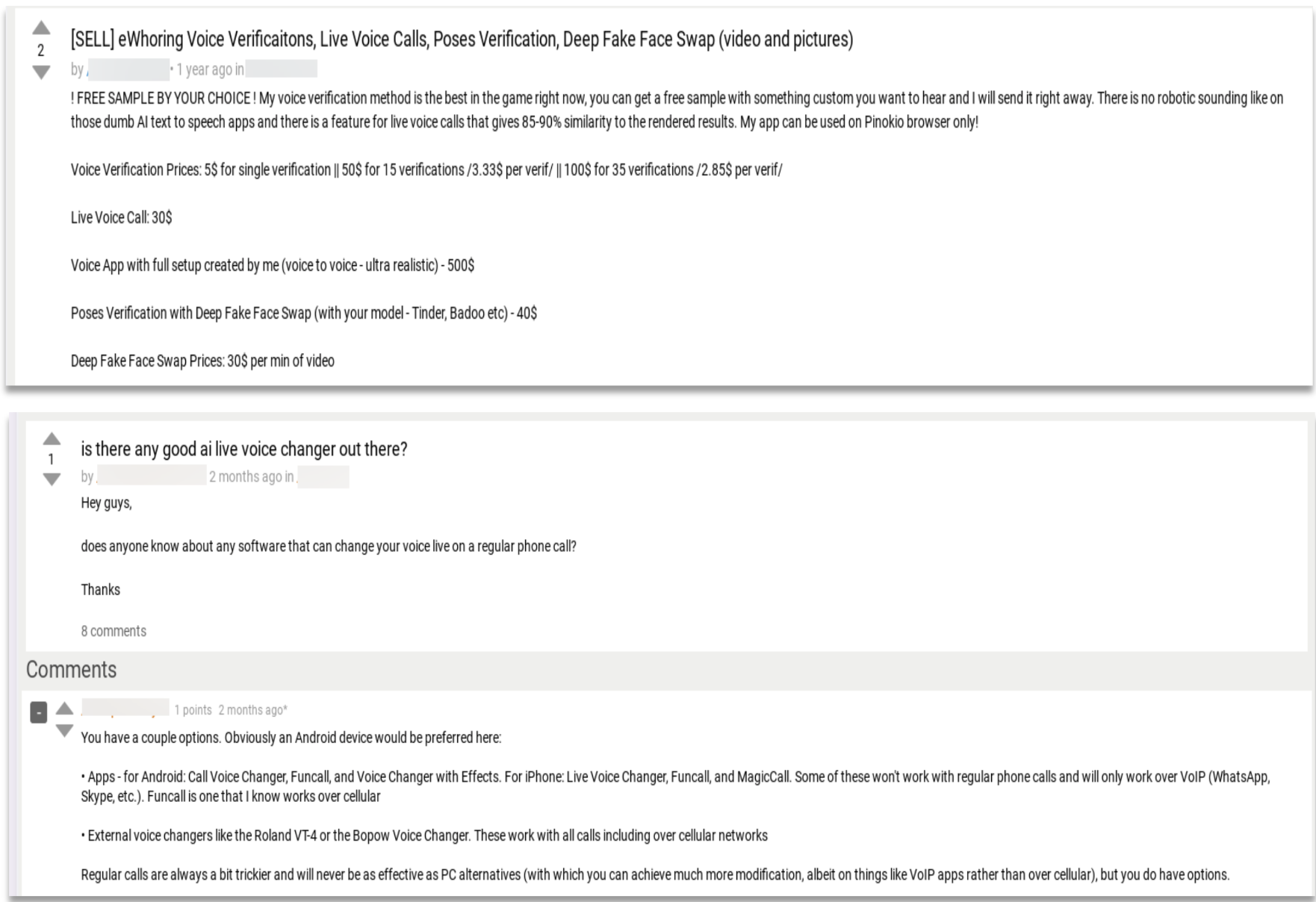
Despite the wide array of options, fraudsters appear to gravitate towards a few popular tools. For real-time face swapping, DeepFaceLive and Deep-Live-Cam appear to be the preferred options.
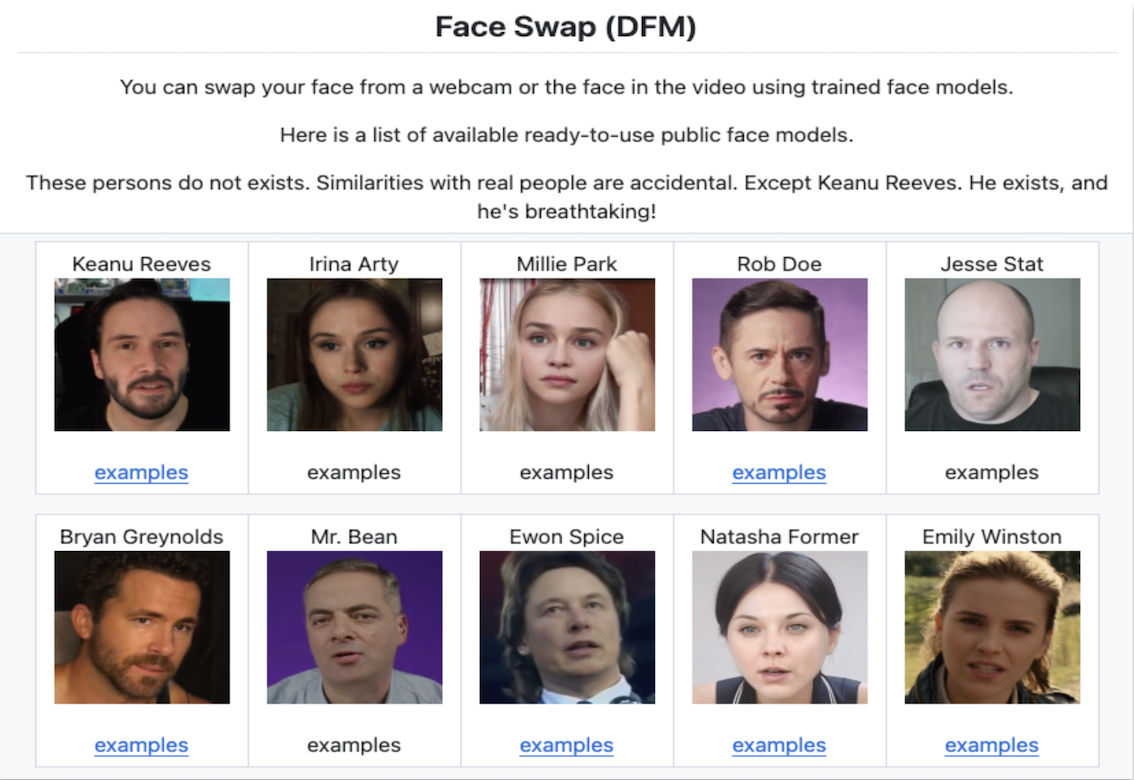

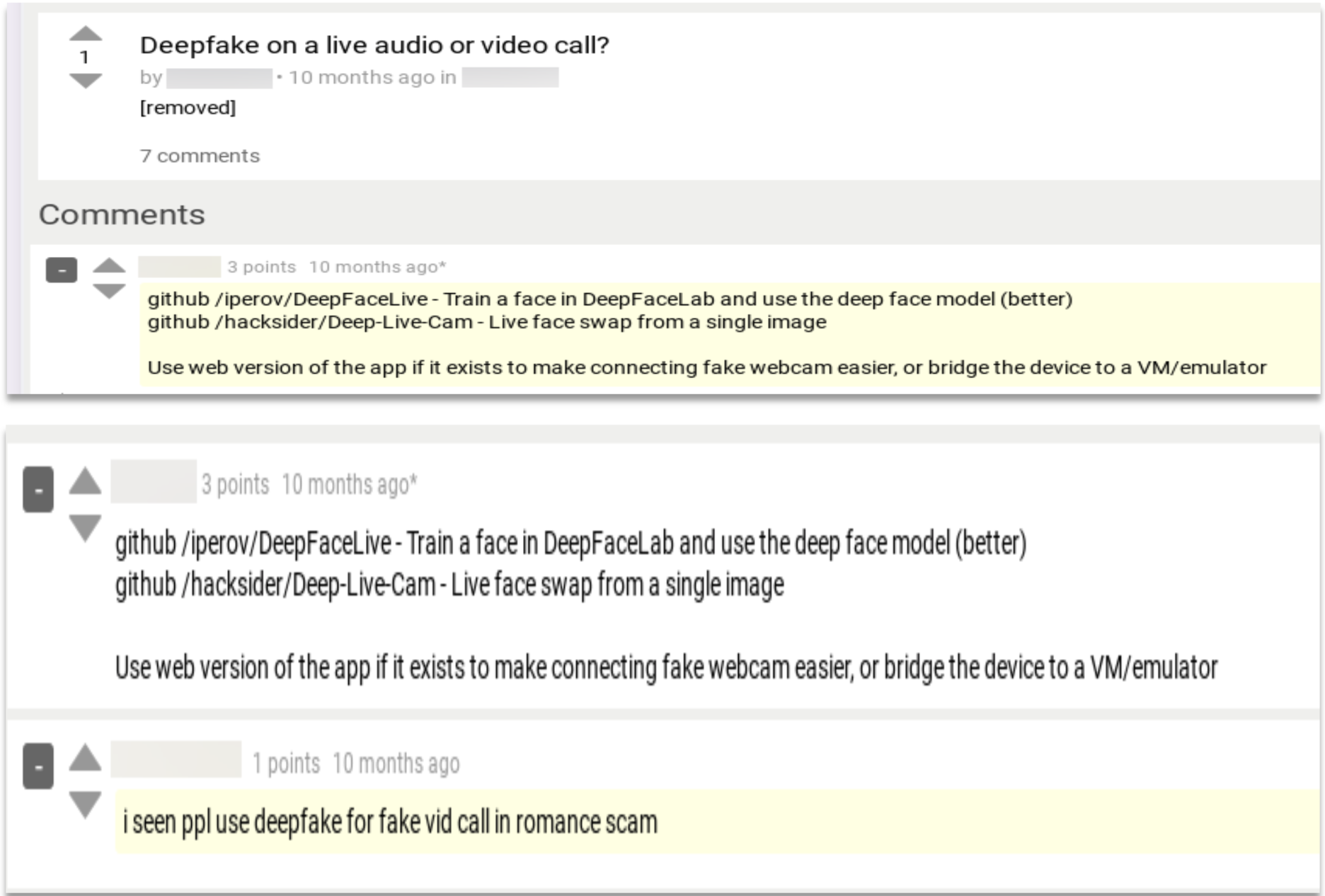
Popular audio tools amongst fraudsters include Bluff My Call and Voice.AI. Bluff My Call allows users to change their caller ID, record calls, and disguise voices, while Voice.AI integrates artificial intelligence for real- time voice-changing purposes, including a collection of thousands of free voices and the ability to generate new voices.


Conclusion
Cybercriminals are utilizing AI to improve the effectiveness of romance scams. Deepfake, face swapping, and voice changing tools are being used in concert with prewritten scripts intended to create genuine romantic connections to exploit victims. Cybercriminals are specifically targeting the elderly and less technically-savvy populations who are more susceptible to believing that they are speaking to a real individual.
Our recommendations include greater education on romance scams and the basics of social media. Individuals who are aware of the repeated scripts, questions, and conversations used by fraudsters are less likely to fall victim to these schemes. Additionally, advising individuals that celebrity social media accounts are typically “verified” can help prevent them from interacting with potential imposter accounts.