
Buried Treasure: Fraudsters Digging for Treasury Checks

Introduction
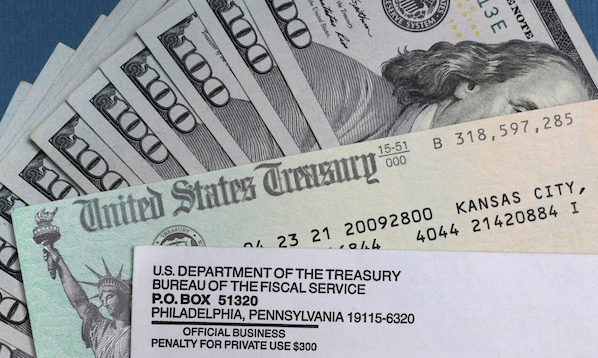
- The circulation of stolen treasury checks, also known as “stimmys”, in underground check markets is not a new phenomenon; however, these checks have recently been gaining considerably more attention from fraudsters.
- From June to July 2024, there is an 86% increase in the amount of chatter related to treasury checks.
- At the same time, the number of compromised treasury checks posted on Telegram this year also climbed throughout the summer, reaching 22,000 images in August alone.
- The rising popularity of Treasury checks amongst fraudsters is partly driven by the lack of or minimal hold times associated with treasury checks and that the payee’s name cannot be verified by the Treasury Department1.
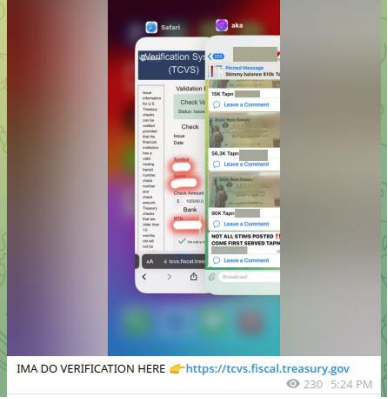
- Fraudsters even are utilizing the Bureau of the Fiscal Service’s Treasury Check Verification System (TCVS) to validate checks.
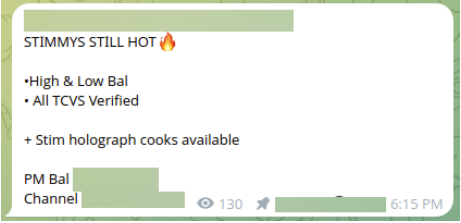
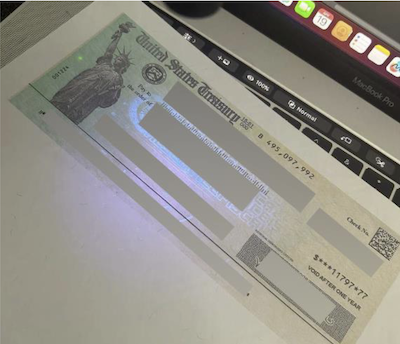
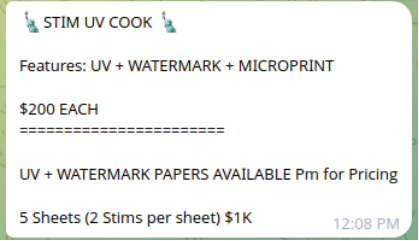
- Treasury checks are also being digitally altered or “cooked” 2 to change the payee information. In doing so, sophisticated fraudsters have learned to replicate watermarks and ultraviolet overprinting patterns. There is also chatter referencing double endorsement of treasury checks.
Fraudsters’ Use of the Treasury Check Verification System
The Treasury Check Verification System (TCVS) was created by the U.S. Department of the Treasury’s Bureau of the Fiscal Service to assist with fraud detection. Fraudsters have exploited this tool to confirm that compromised treasury checks have been issued. Verifying a check through TCVS is available to the public.
Digital Alteration of Treasury Checks
The U.S. Treasury Department has implemented a variety of security features within treasury checks to reduce fraud and make it more difficult for fraudsters to replicate them. These features include the Treasury seal, bleeding ink, microprinting, watermarked paper, and an ultraviolet overprinting pattern3. Despite these efforts, fraudsters have appeared to successfully replicate these features onto “cooked” treasury checks prior to depositing the funds.
Mitigating the Threat
Improving bank teller detection of altered treasury checks through education and training can help prevent future fraud. Additionally, some financial institutions are exploring restricting or limiting the deposit of treasury checks through ATMs. While fraudsters are improving the quality of their replicas, informed bank tellers may be able to identify them prior to the funds clearing. Tellers and financial institutions should also be aware that treasury check fraud typically increases during tax season. For example, chatter related to treasury checks increased by 118% from Q1 to Q2 in 2024, and the number of compromised treasury check images posted on Telegram increased by 120% over the same period of time.
2The term “cooked” refers to the digital alteration of the check.
3https://fiscal.treasury.gov/files/reference-guidance/gold-book/check-security-features.pdf