
Face Off – When Deepfakes Fail, The Masks Come On
UNMASKING A THREAT TO KYC
In 2025, AI-driven scams targeting Know Your Customer (KYC) controls have become a growing concern, with deepfakes now accounting for one in every 20 identity verification failures.1 In addition, according to AuthenticID’s 2025 State of Identity Fraud Report, 46% of surveyed businesses reported a year-over-year increase in deepfake and generative AI fraud.2 This is the last installment in our deepfake series.
As AI-driven fraud accelerates, it’s become a top concern for security experts. To counter this growing risk, researchers suggest that integrating advanced biometric verification with AI-powered detection algorithms could arm defenses against video-based manipulation by nearly 40%.3
Increased investment in deepfake detection has fueled market growth, with recent analyses projecting the sector to exceed $3.5 billion by the end of 2025.4 Another forecast estimates the broader deepfake detection market will reach $15.7 billion by 2026.5
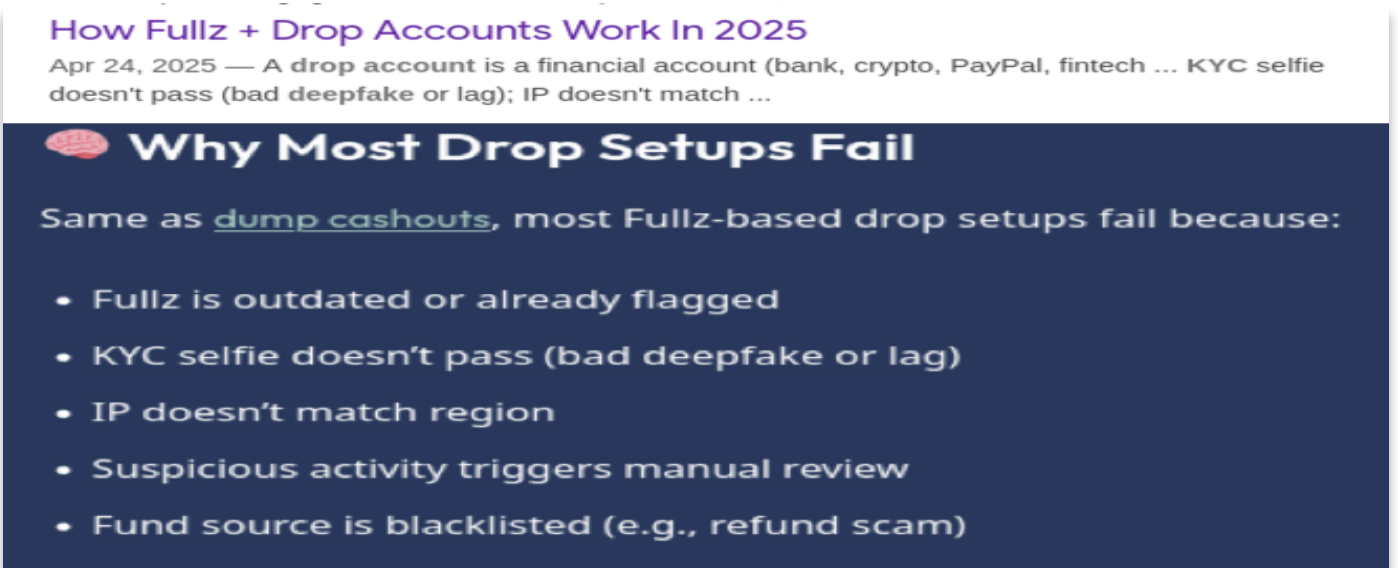
Although cybercriminals continue to abuse deepfake technology for KYC, some have commented that organizations have seemingly implemented measures to better detect these attempts, making it more difficult and complicated for cybercriminals to bypass these controls.
As such, cybercriminals are exploring more creative ways to authenticate. We have observed an interest in using high quality silicone or latex masks, noting they too can be used to bypass KYC. Although the use of hyper realistic masks by criminals is not a new tactic, it continues to play a role in crime. In one recent high-profile case involving the murder of two Democratic lawmakers, the suspect impersonated a police officer reportedly wearing a hyper realistic face mask.6
FACING THE FACTS: DEEPFAKES MEET THEIR MATCH

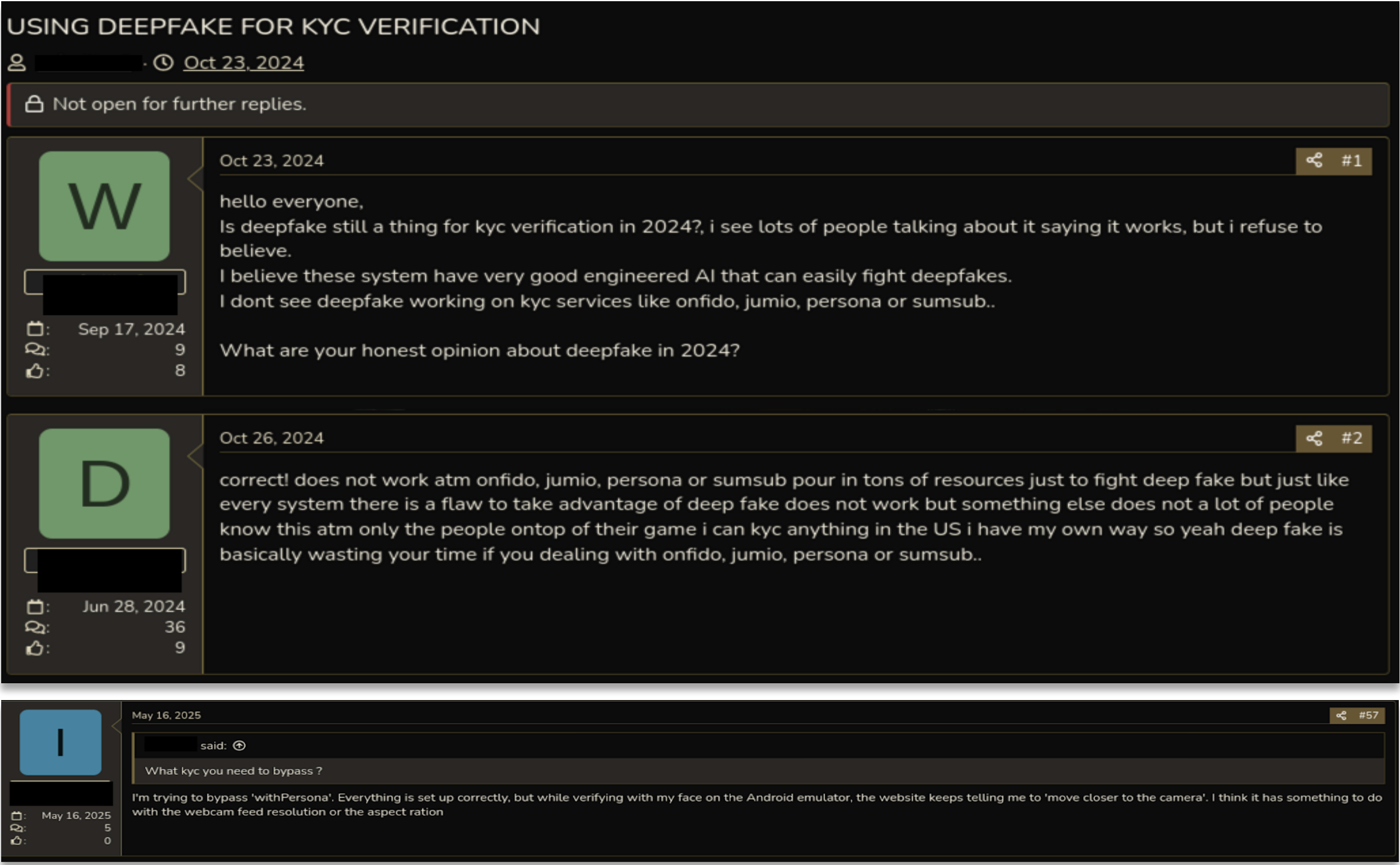
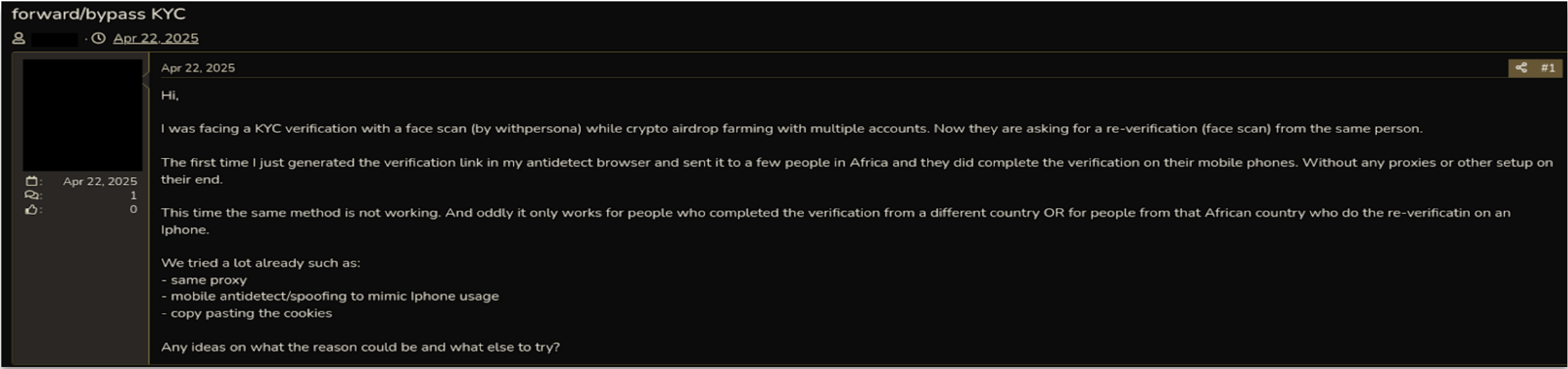
 Cybercriminal notes that KYC solutions detect the use of an emulator. An emulator is a software program that replicates the hardware and software environment of a particular device, enabling applications to operate as though they were running on the original system.7

SILI“CON”: HYPER REALISTIC THREAT
As deepfake detection improves and cybercriminals face greater obstacles in using this technology, hyper realistic masks provide an “old school” solution. Underground chatter suggests that silicone and latex masks can be an effective option for circumventing KYC protocols. Specifically, cybercriminals have discussed using hyper realistic masks for taking selfies and live verification videos as part of online account registration processes.
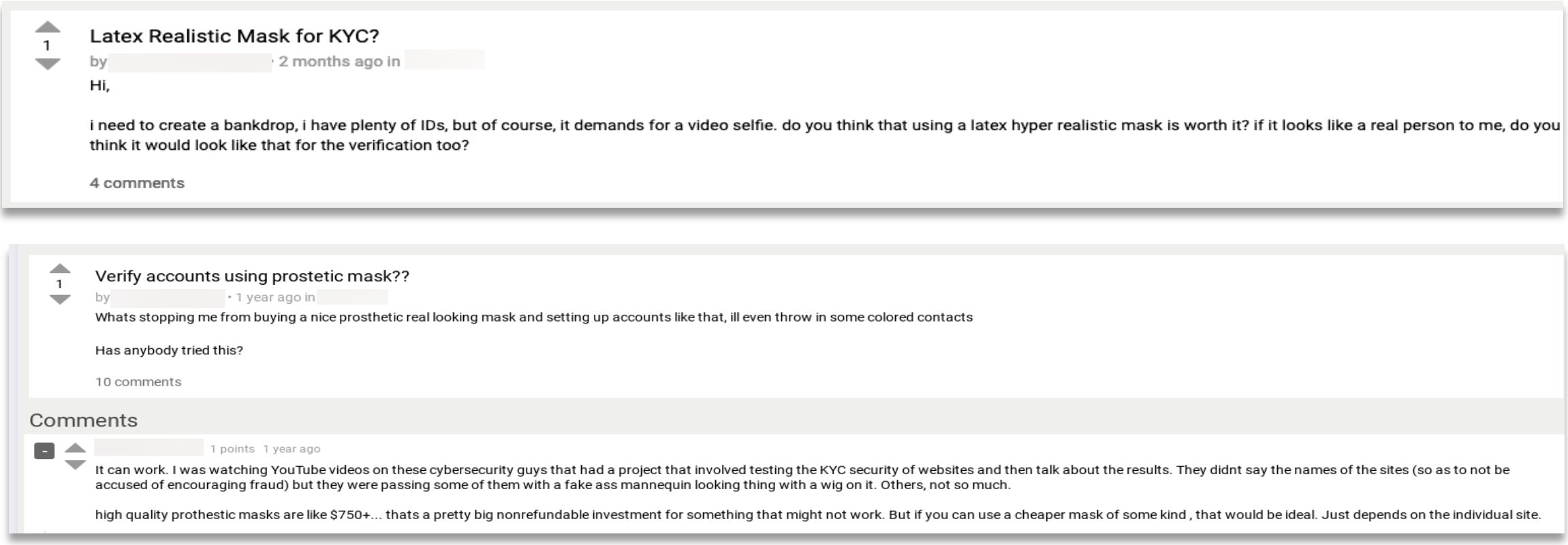
Other conversations amongst cybercriminals in underground forums are centered around locating sources and sellers for masks.

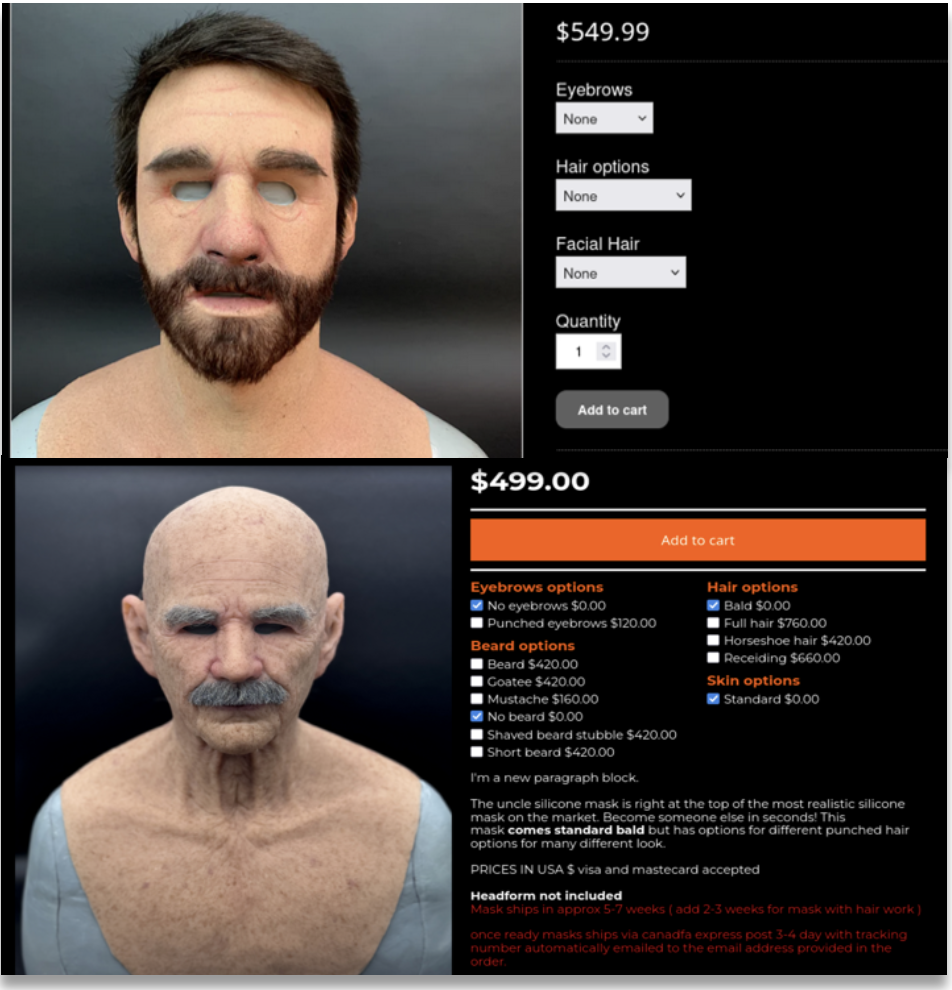
Hyper realistic masks are openly sold on the clear web and often marketed toward the film industry; however, they can also be acquired and misused by threat actors for illicit purposes.
Websites selling silicone masks are highly customizable and often include the ability to choose from a variety of eyebrow, hair, and beard options. Some sellers also offer silicone arm sleeves that are designed to match the purchased face mask.
Cybercriminals have noted the high cost of hyper realistic masks, which typically range from $500 to $700. However, given the customizability and reusable nature of these masks, cybercriminals may bear these costs as deepfakes become less capable of defeating KYC protections.
RECOMMENDATIONS
- While deepfakes and hyper realistic masks pose significant challenges to organizations’ KYC authentication procedures, institutions can mitigate these risks by employing solutions that leverage the latest liveness detection and facial recognition technology. Liveness detection can include prompts such as blinking, turning of the head, or using a hand to cover their face.
- Organizations can also invest in the growing deepfake detection market and utilize AI-powered tools that can differentiate between live humans and overlayed images or masks. This technology can identify lighting and texture inconsistencies or unnatural facial movements.
- Perpetual KYC (pKYC) is another option for continuous and real-time customer verification. pKYC uses automation to constantly update customer data and monitor transactions and behavior. Persistent, real-time oversight can help alleviate the risks associated with traditional KYC procedures.8
2https://www.authenticid.com/fraud-prevention/defending-your-organization-against-deepfakes-in-2025/
3https://www.tuvoc.com/blog/deepfake-ai-in-2025-navigating-threats-and-unveiling-opportunities/
4Ibid
5https://www.deloitte.com/us/en/insights/industry/financial-services/deepfake-banking-fraud-risk-on-the-rise.html
6https://www.cnn.com/us/live-news/minnesota-shootings-manhunt-06-15-25
7https://www.browserstack.com/guide/what-is-an-emulator
8https://ondato.com/blog/perpetual-kyc/#Perpetual_vs._Traditional_KYC