

BETTING ON FRAUD:WHY ONLINE GAMBLING FRAUD IS SURGING

ALL BETS ARE OFF
In January 2025, a report published by biometricupdate.com1 highlighted a significant surge in online gambling fraud – 73% between 2022 and November 2024.2
- Fraudsters exploit online gambling platforms to cash out or launder funds. They do so by creating new accounts using synthetic or stolen identities, or by taking over accounts of legitimate users.
- These accounts are then used to cash out funds through various methods. In this report we will discuss three common cash-out methods including purchasing stakes, gambling with low coefficient rates, and betting using small portions of the deposited funds.
HOW ONLINE GAMBLING IS BEING EXPLOITED
In general, fraudsters’ use of online gambling and sports betting platforms is an effective scheme to cash out and/or “launder” money obtained from a variety of illegitimate sources.
In addition, since gambling often falls under the “grey” category of online business, many online gambling sites—depending on the jurisdiction—tend to have weaker “Know Your Customer” (KYC) protocols compared to traditional financial institutions. In regions with lax regulatory oversight, the ease of creating gambling accounts without rigorous identity verification enables fraudsters to more easily deposit and launder illicit funds.3
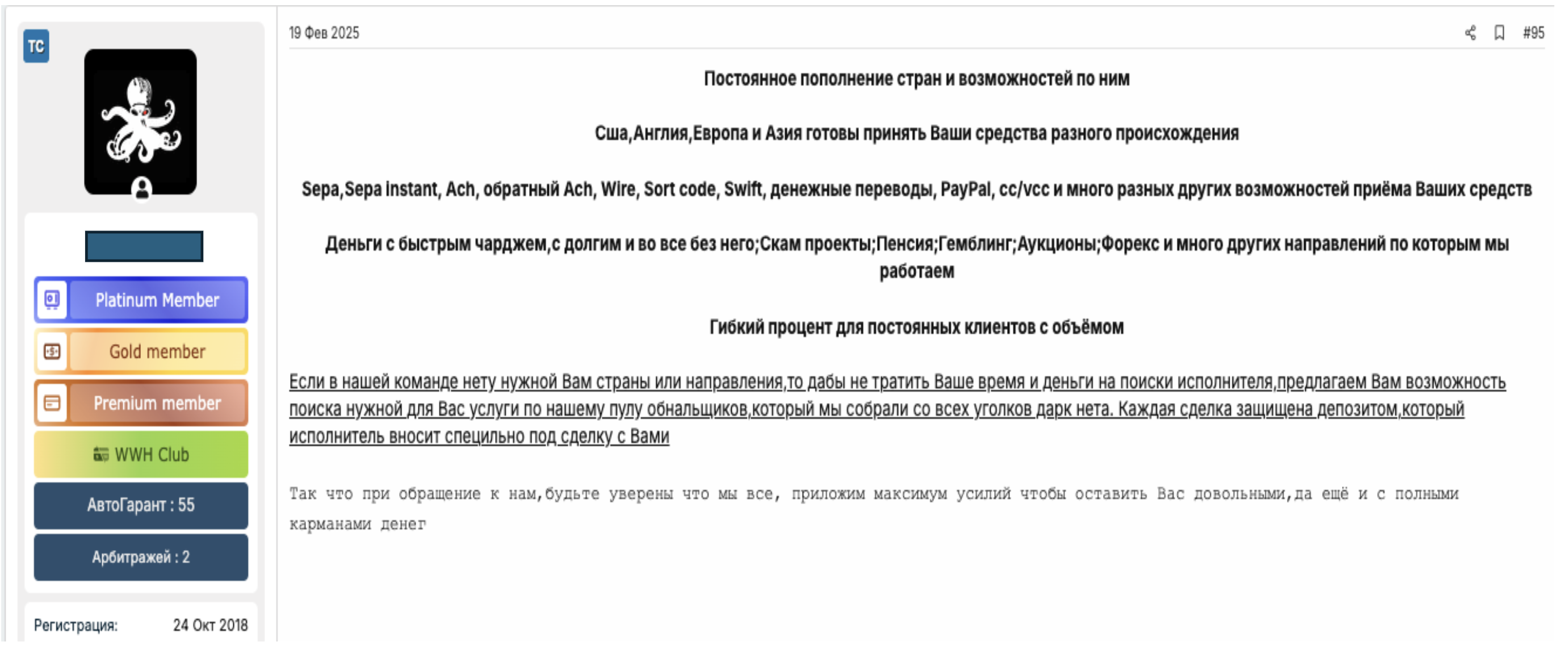
In fact, underground cash-out vendors specifically highlight the use of online casinos and sport betting platforms.
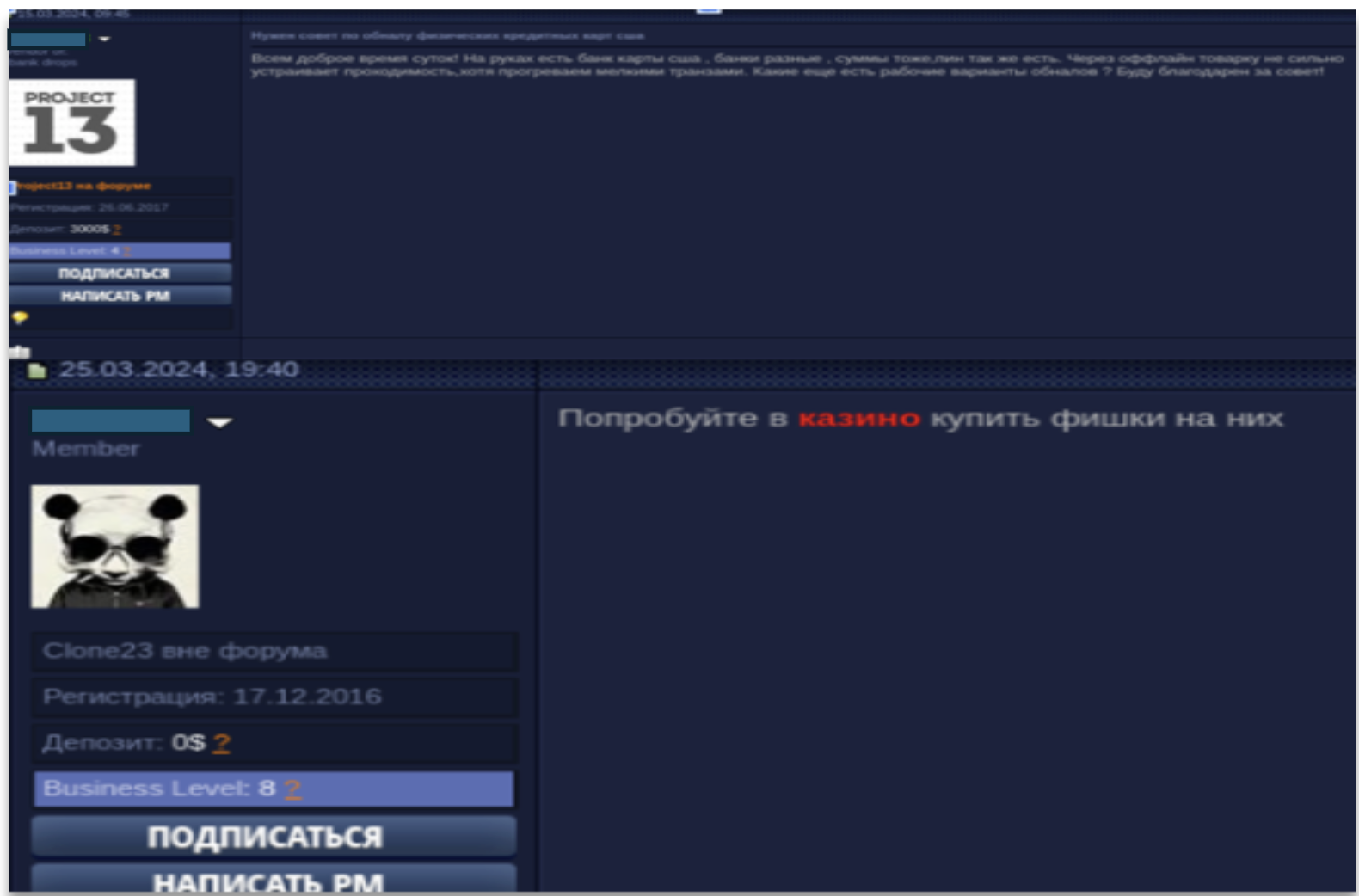
In this discussion on a sophisticated underground Russian-speaking forum, online casinos are recommended as a preferable way of cashing out compromised US payment cards.
Another example of a reputable and seasoned cash-out vendor who lists gambling platforms as a tool for moving funds.
Another reason for the popularity of online gambling among fraudsters is that it is widely considered a “high-risk” sector4 especially in jurisdictions with lax regulatory oversight.
As a result, some major and popular online payment processors avoid working with these sites. Consequently, chargebacks in the gambling industry often take longer to process, giving fraudsters more time to withdraw stolen funds before the fraudulent activity is detected.
THE HOUSE DOESN’T ALWAYS WIN: LAUNDERING FUNDS
As a first step, fraudsters create online betting accounts using synthetic and/or stolen identities and then “age” them or, by taking over accounts of legitimate users or purchasing an already “aged” accounts on the Dark Web.
While fraudsters employ various strategies, the following 3 strategies are quite common:
- Purchasing stakes in ongoing bets to create the illusion of active participation.
- Gambling with low coefficient rates, in which fraudsters place bets with minimal risk.
- Betting on games and gradually using small portions of the deposited funds to further show “genuine” gambling behavior.
The purpose of these methods is to create the illusion of an active gambling account, thus paving the way for eventual withdrawal/cash-out. Notably, the deposited funds may have been stolen from compromised payment cards, bank accounts or crypto- exchange accounts.
The core objective of this scheme is for fraudsters to deposit these funds into the betting account, participate in gambling activity to demonstrate legitimacy, and ultimately to withdraw the “laundered” funds.

A fraudster posting in a group asking for aged accounts to load up $5,000 dollars. They also stated they are “doing CC topups” with “no chargebacks” and they only want “high limit CCs only.”

Another example of a fraudster posting saying that they can load up $10,000 dollars into different aged betting accounts.

A fraudster posting a screenshot of a pending charge from a credit card account at FanDuel, which is a popular sports betting platform.
RECOMMENDATIONS
- Consider implementing rules to flag account activity to / from online gambling platforms, especially in foreign jurisdictions. This may include payment cards too.
- Flag and investigate newly opened accounts that receive or withdraw large amounts from online gambling sites.
2Ibid
3https://www.aboutchromebooks.com/blog/how-games-without-kyc-operates-in-a-gray-area
4https://www.yogonet.com/international/news/2021/10/25/59892-why-the-gaming-business-is-highrisk-for-payment-companies