
A Deep Dive Into Deepfakes: March 2024

Introduction
- Over the last few years, and more recently propelled by rapid advancements in artificial intelligence, there has been a growing concern related to the proliferation of deepfakes.
- Deepfakes utilize artificial intelligence and machine learning to generate synthetic audio, videos, and images that are designed to impersonate the likeness of a real person or document.
- Widespread media attention has also attracted fraudsters, who are attempting to utilize deepfakes to carry out a variety of scams.
- Fraudsters’ interest in deepfakes growing quickly, as evidenced by a 335% increase in related chatter on Telegram from 2022 to 2023.
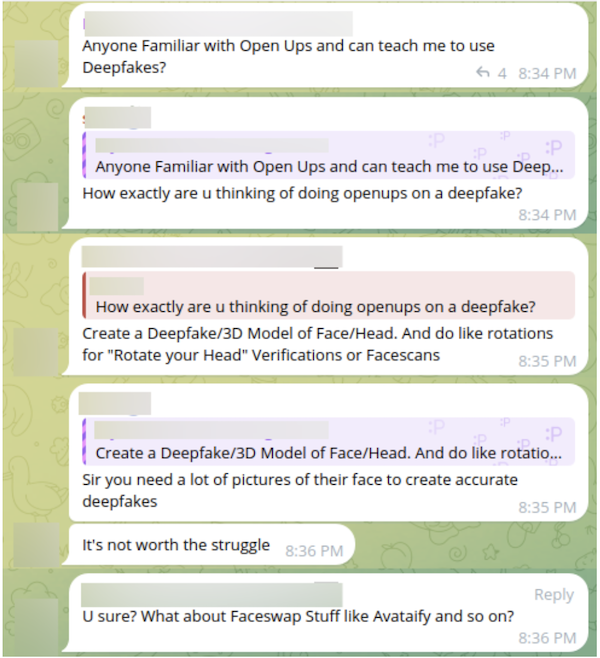
- As we will detail below, fraudsters today are mainly applying deepfake technology toward bypassing Know Your Customer (KYC) protocols, creating fictitious documents, and blackmail. Fraudsters also frequently share their latest software recommendations and teach courses on creating deepfakes.
- Although fraudsters are divided over the usefulness of deepfakes given the current technological impediments, fraudsters appear optimistic that future enhancements to this technology will allow for increased application.
Fraudsters’ Current Uses of Deepfake Technology
Bypassing Know Your Customer Requirements
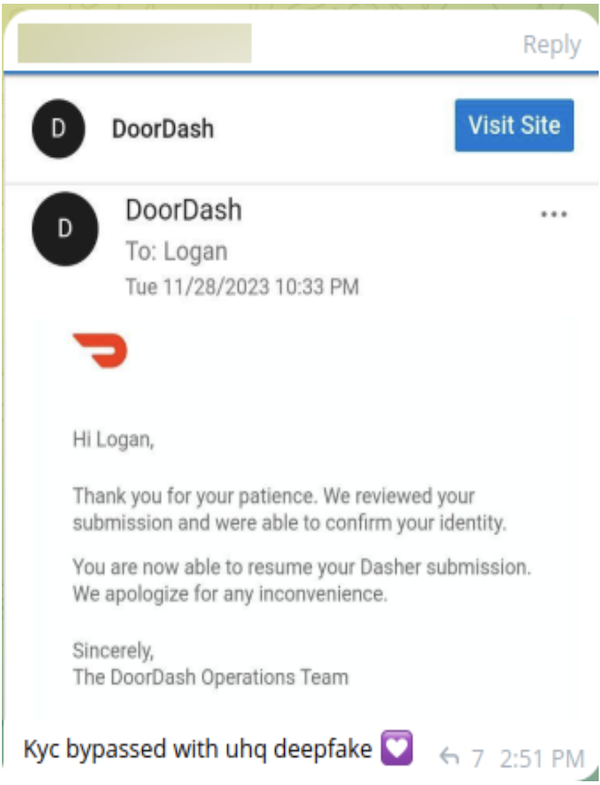
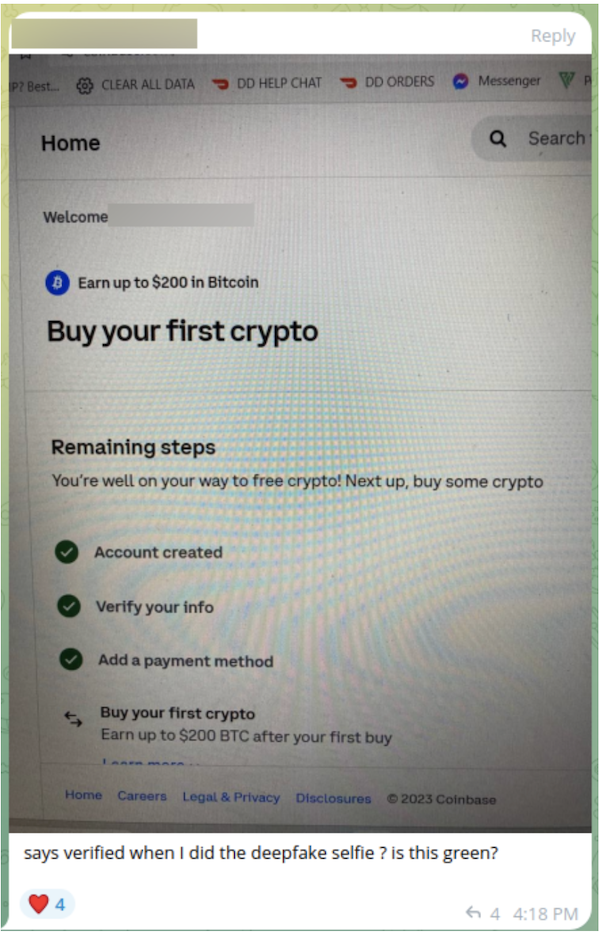
Deepfakes, and their ability to imitate an individual’s appearance and voice, are presently being used by fraudsters to circumvent the Know Your Customer (KYC) requirements of financial institutions, crypto companies, and application delivery services, among others. KYC regulations are designed to verify that an individual is who they claim to be when opening an account, but fraudsters appear to successfully skirt these protocols using deepfakes.
Generating Fictitious Documents
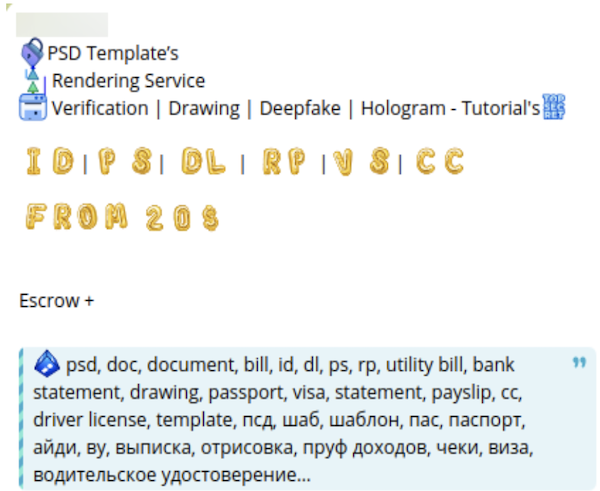
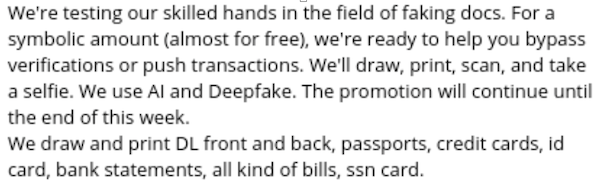
Fraudsters are also exploiting deepfake technology to produce fabricated documents including driver’s licenses, passports, credit cards, identification cards, bills, bank statements, and visas. Although fictitious document services have existed for several years, fraudsters’ use of deepfake documents are more likely to bypass verification processes because these platforms have not fully integrated the technology that is required to identify falsified deepfake documents1. These documents can also be used as part of schemes to evade KYC guidelines and open accounts.
Blackmail & Impersonations
Chatter on Telegram also indicates that fraudsters are using deepfake technology for blackmail. The FBI issued an advisory in June 2023 outlining the threat from malicious actors using deepfakes for sextortion and harassment 2.
What Deepfake Tools are Fraudsters Using?
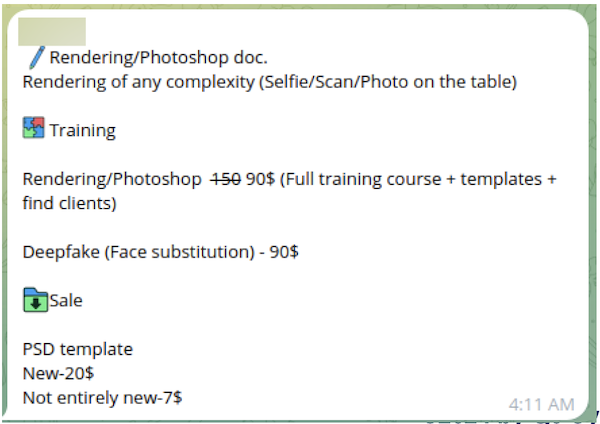
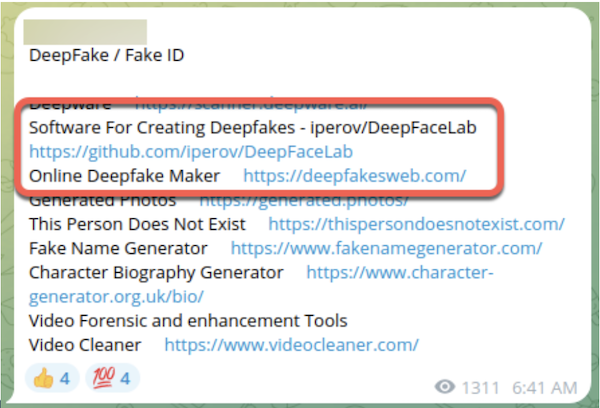
There are many resources available to fraudsters interested in incorporating deepfakes into their illicit activities. In addition to numerous websites offering deepfake tools, fraudsters advertise courses and tutorials to teach others how to utilize the technology. Prices for deepfake apps and other open-source software generally ranges from free to $100 for a yearly subscription. Fraudsters also offer a variety of courses on deepfakes, which are priced from under $100 for basic face substitution to $1,200 for sophisticated live deepfake selfie verification.
An Eye Toward the Future
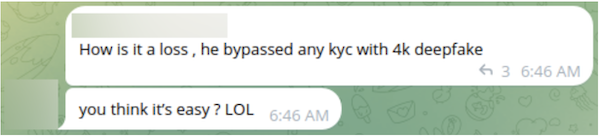
Within the digital underground, fraudsters share mixed reviews on the success of using deepfakes to open new accounts and bypass KYC protocols. Some fraudsters claim to have successfully used deepfakes for these purposes, while others argue that deepfakes require too much effort and that their current tactics are more efficient. At the same time, in response to this emerging and growing threat, companies have begun developing and implementing mitigation strategies to identify and control new account applications opened with deepfakes. Overall, fraudsters may be reluctant to use deepfakes until the technology improves; however, they are actively monitoring advancements in this space and are optimistic about future applications of these high-tech tools.

2Ic3.gov/Media/Y2023/PSA230605